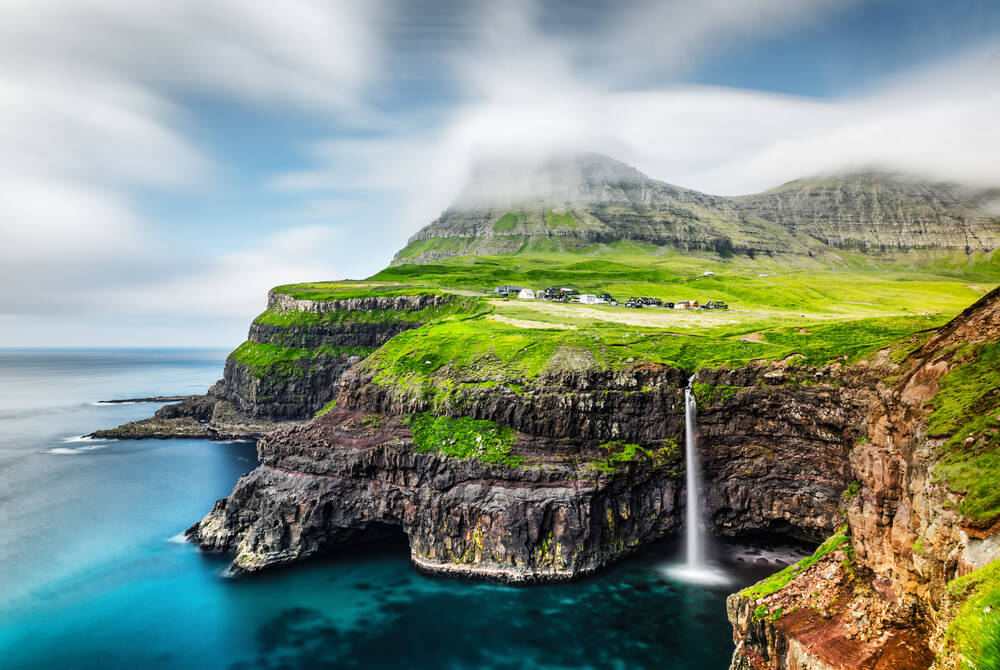
Protruding from the swells of the North Atlantic Ocean at the maritime crossroads between Iceland, Norway and Scotland are the Faroe Islands, an archipelago of 18 wild, rugged basalt islands formed by volcanic activity around 50-60 million years ago. The glaciers of subsequent ice ages sculpted the epic landscapes of the Faroe Islands as we see them today; pyramid-shaped mountains, steep-sided fjords, soaring sea cliffs and treeless moorlands, perpetually lashed by the wind and often blanketed in fog.
The name Føroyar (Faroe Islands) derives from Old Norse and translates to ‘Sheep Islands’ – rather appropriately, given that sheep significantly outnumber humans. The Vikings settled here in the ninth century, although more recent evidence suggests that Irish monks may well have arrived around 350 years earlier. Since being granted Home Rule in 1948, the Faroe Islands have been a semi-autonomous, self-governing territory within the Kingdom of Denmark. Around 40 percent of the population is based in Tórshavn, one of the world’s smallest and most picturesque capital cities, nestled on the southeast coast of Streymoy – the largest island in the archipelago.
Today, most of the islands are linked by an extensive network of bridges and tunnels, while ferries offer connections to more remote parts of the archipelago. Without further ado, here’s all you need to know when planning a trip to the Faroe Islands.
How to get to the Faroe Islands
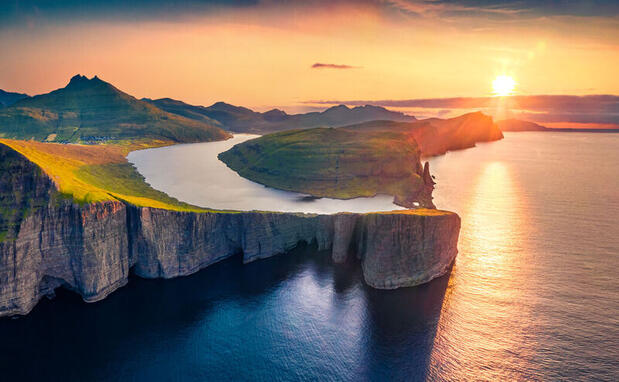
Lake Sørvagsvatn, Vágar Island
Atlantic Airways, the national airline of the Faroe Islands, operates direct flights (2 hours 15 minutes) from London Gatwick to Vágar Airport on Tuesdays and Saturdays from June to August. Edinburgh is also served by twice-weekly direct flights (1 hour) to the Faroe Islands from March to December.
It’s also possible to fly indirectly to the Faroe Islands via Copenhagen, Reykjavik or Oslo, all of which have year-round flights to Vágar Airport. While these routes take longer than flying directly from the UK, they allow the possibility of combining a trip to the Faroe Islands with time in Denmark, Iceland or Norway.
Alternatively, Smyril Line operates year-round ferry connections between Hirtshals (Denmark), Tórshavn (Faroe Islands) and Seyðisfjörður (Iceland), with the crossing from Denmark to the Faroe Islands taking around 36-40 hours aboard the MS Norröna.
On arrival at Vágar Airport, it’s around a 45-minute drive to Tórshavn. Renting a hire car is highly recommended as this will give you total freedom and flexibility to explore the islands at your own pace. If you’d prefer not to drive, it’s also possible to base yourself in Tórshavn and plan day trips from there.
When to visit the Faroe Islands
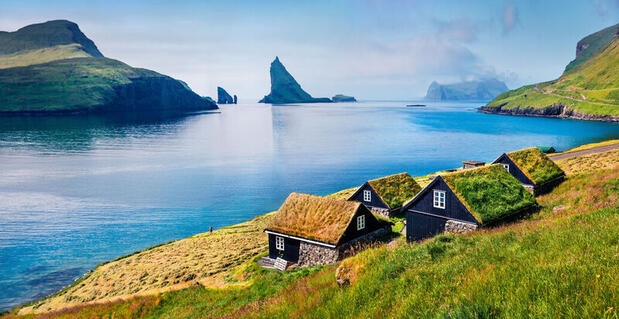
Summer in Bøur, Vágar Island
Summer is the most popular time to visit the Faroe Islands, with almost 24/7 daylight, lower precipitation and temperatures typically around 11°C to 13°C – ideal conditions for hiking, boat trips and wildlife viewing. This is also the best time to see puffins, which arrive on the islands in great numbers from mid-April and leave again in early September. Do bear in mind, however, that summer is when the islands are at their busiest, which is reflected in higher prices of car hire and accommodation.
The shoulder seasons of autumn and spring are certainly worth considering, as the islands are noticeably quieter and prices generally lower – but you should be prepared for highly changeable and unpredictable weather.
Winter sees significantly fewer visitors in the Faroe Islands, with very short days (just five hours of daylight in December) and frequent stormy conditions with strong winds, rain and snow. However, despite the archipelago’s northerly latitude (62ºN), winter temperatures are relatively mild, owing to the North Atlantic Current, typically hovering around 1ºC to 6ºC and rarely dipping much below freezing. The Faroe Islands look spectacular when blanketed in snow, but it’s difficult to know when such conditions will arrive and how long they’ll persist for.
The Northern Lights are visible in the Faroe Islands from mid-August to late April, but the most common barrier to seeing them is the high likelihood of cloudy skies. If seeing the Northern Lights is at the top of your agenda, there are plenty more reliable destinations to visit – but if you’re fortunate, you might just catch a glimpse of them in the Faroe Islands.
How long to spend in the Faroe Islands
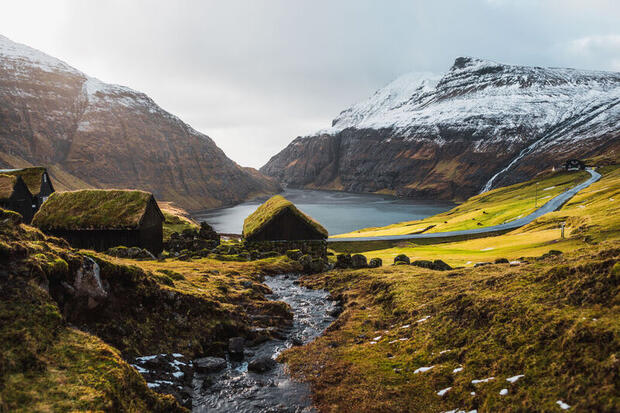
Saksun, Eysturoy Island
Ideally, allow a minimum of four nights for a trip to the Faroe Islands. This is just enough time to cover the highlights of the archipelago. However, staying for a week will allow you to explore the islands at a more relaxed pace and visit some of the more remote areas that are difficult to squeeze into a shorter trip. Also bear in mind that the longer you stay for, the more flexibility you have to adapt your plans according to the weather conditions.
Where to stay in the Faroe Islands
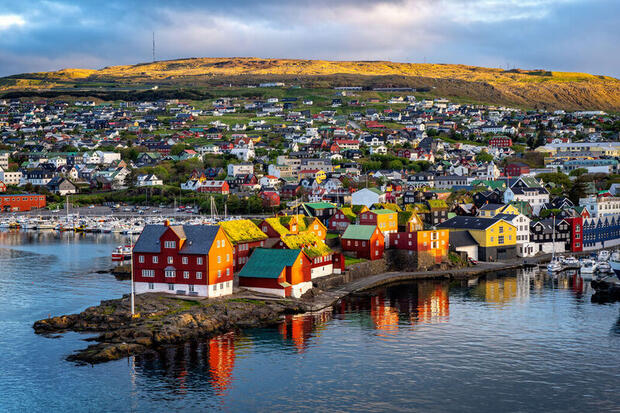
Tórshavn, capital of the Faroe Islands
By far the greatest choice of accommodation in the Faroe Islands can be found in the capital, Tórshavn. From here, it’s possible to drive almost anywhere in the archipelago within an hour, making it an ideal base from which to plan day trips. Hotel Føroyar is a standout choice, set on a grassy hillside with wonderful views over Tórshavn, featuring a state-of-the-art spa and a gourmet restaurant specialising in authentic and seasonal Faroese cuisine. Other excellent options include Hilton Garden Inn Faroe Islands and Hotel Brandon, both of which pair sleek, contemporary design with traditional Faroese turf-roofs.
The newly-opened KG Hotel in Klaksvík, the second-largest town in the Faroe Islands, is perfectly positioned for exploring the northern reaches of the archipelago, with an impressive spa and a restaurant serving local dishes alongside superb fjord and mountain views.
Outside of the major towns, accommodation is mostly limited to small guesthouses, cabins and cottages, which are worth considering if you’d prefer to move around the islands rather than basing yourself in one place for the duration of your trip.
Things to see & do in the Faroe Islands
Hiking
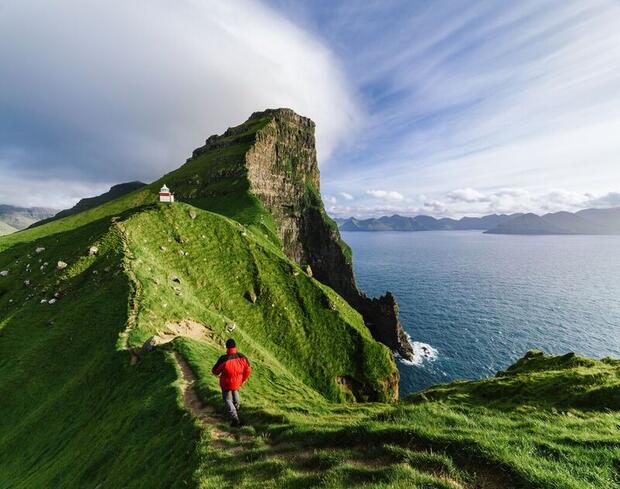
Hike to Kallur Lighthouse, Kalsoy Island
The Faroe Islands are a hiker’s paradise, home to a plethora of astonishingly scenic trails winding through the mountains and along precipitous clifftops. One of the most iconic hikes brings you to Trælanípa, a cliff on Vágar Island with magnificent views towards Sørvágsvatn – also known as ‘the lake above the ocean’. Another breathtaking trail leads from the village of Trøllanes to Kallur Lighthouse on Kalsoy Island, which featured in the James Bond movie No Time to Die (there’s a tombstone here dedicated to James Bond). It requires a little more planning, as you’ll need to take a ferry from Klaksvík to Kalsoy, which is usually busy and requires pre-booking. Klaksvík is also the starting point of the hike to Klakkur, which brings you along a mountain ridge with panoramic views overlooking the islands of Borðoy, Kunoy and Kalsoy. The lesser-known hike to Hvíthamar viewpoint, meanwhile, just above the village of Funningur, also offers some of the finest views in the Faroe Islands.
While some hikes in the Faroe Islands are free, several popular trails including those to Trælanípa and Kallur Lighthouse require a mandatory fee in the region of 200-450 DKK per person.
Múlafossur waterfall
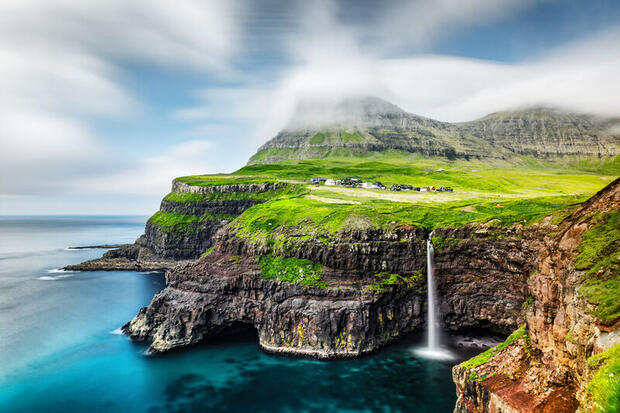
Múlafossur waterfall, Vágar Island
Just outside the village of Gásadalur on Vágar Island, this exceptionally beautiful waterfall tumbles 30 metres from a grassy cliff directly into the Atlantic Ocean. It’s one of the most awe-inspiring landmarks in the Faroe Islands, and as it lies just a 15-minute drive from the airport, it’s the perfect spot to start or end your trip.
Old Town of Tórshavn
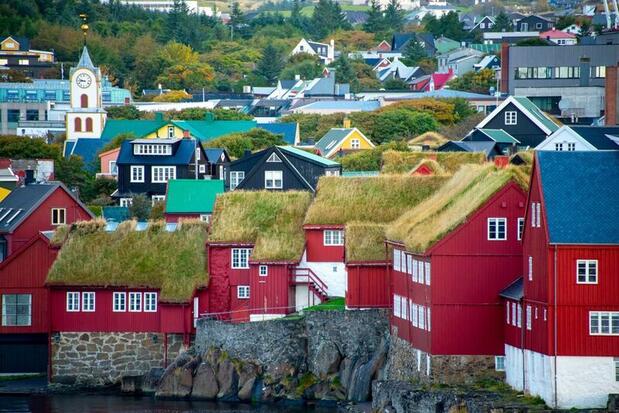
Old Town of Tórshavn
Tórshavn is a remarkably photogenic city, and this is especially true of its well-preserved historic core, spread along a narrow, rocky outcrop (Tinganes) that divides the two main harbours. This was the original site of the Faroese Parliament (Løgting) during the Viking Age, and among the cluster of red, turf-roofed buildings at the tip of the peninsula is the Prime Minister’s office along with several other government buildings. As you wander among the cobbled lanes of the Old Town, you’ll find many traditional black-tarred, turf-roofed cottages that date back to the 14th century and continue to be lived in today.
Puffins of Mykines
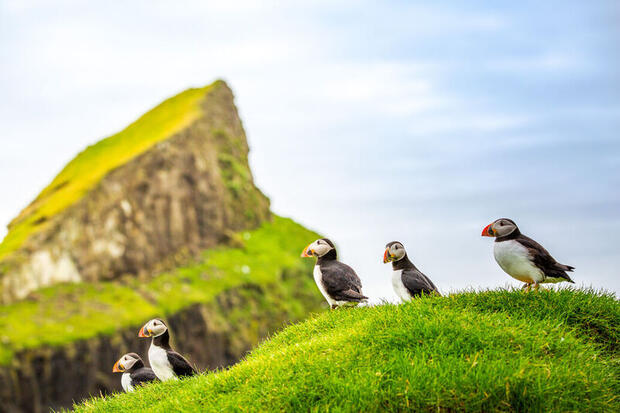
Puffins on Mykines
A rich variety of bird species nest and breed on the sea cliffs of the Faroe Islands throughout the summer months, including puffins, guillemots, kittiwakes, and fulmars. The westernmost island in the archipelago, Mykines, is the best place to see puffins, with over 100,000 birds flocking here from mid-April to early September. From 1 May to 31 August, a daily ferry departs from Sørvágur (on Vágar Island) to Mykines, which takes around 45 minutes and must be pre-booked.
Postcard-perfect villages
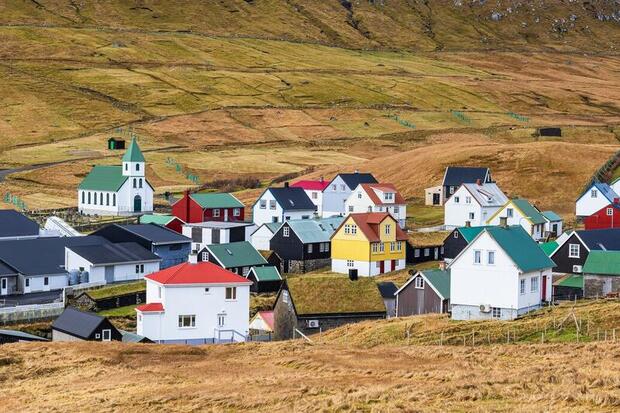
Gjógv, Eysturoy Island
There are dozens of idyllic villages to explore throughout the Faroe Islands, many of them easily reachable within an hour’s drive of Tórshavn. In the north of Streymoy Island, Saksun and Tjørnuvík should both be on your list; the former nestled in a fjord on the edge of a tidal lagoon, and the latter framed by towering mountains that slope down to a black sand beach, facing out towards the Risin og Kellingin sea stacks. On the neighbouring island of Eysturoy, Gjógv is perhaps the most picturesque Faroese village of all, named after a 200-metre-long gorge that runs from the village out to sea. It’s flanked by grassy mountains and sheer cliffs that plunge into the Atlantic Ocean. The drive to get there, via a steep mountain pass, is also incredibly dramatic. Closer to Tórshavn, Kirkjubøur is one of the most significant historical sites in the Faroe Islands, home to the 11th-century Kirkjubøargarður (one of the oldest still inhabited wooden buildings in the world), the ruins of St. Magnus Cathedral and St. Olav’s Church.
Nólsoy
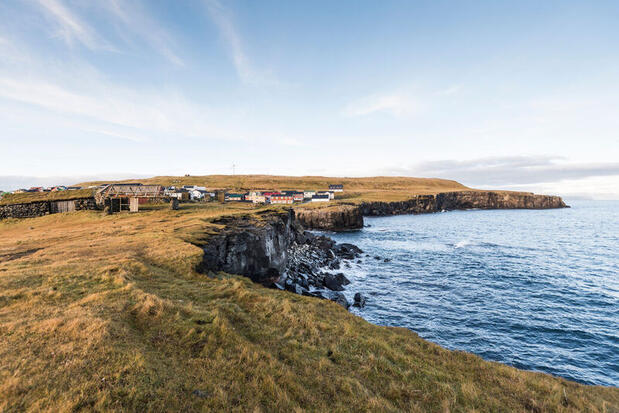
Nólsoy
Nólsoy is one of the smaller islands in the archipelago and lies just five kilometres east of Tórshavn – around a 20-minute ferry journey, making it an ideal day trip destination from the capital. It acts as a natural barrier, protecting Tórshavn from the harshest waves of the North Atlantic, while the sheltered stretch of water between Tórshavn and Nólsoy is usually fairly calm. There’s just one tiny, picturesque village at the northern tip of Nólsoy, home to around 230 people. The island is a prime spot for hiking and birdwatching, with the world’s largest colony of European storm petrels found on the eastern coastline. Puffins can also be seen here throughout the summer months.
Sandoy
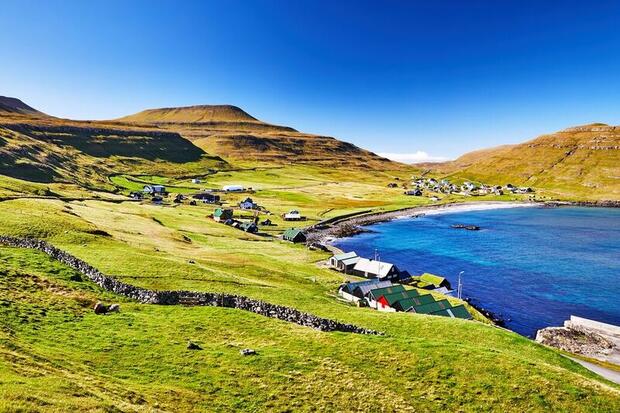
Húsavík, Sandoy Island
Just south of Streymoy lies Sandoy, one of the most sparsely populated and lesser-visited islands in the archipelago – but one with lots to offer in the way of superb hiking, remote villages and beautifully unspoilt landscapes. Up until recently, Sandoy was relatively isolated and therefore overlooked on most Faroe Islands itineraries, but since the opening of a 10.8-kilometre sub-sea tunnel in December 2023, it has been connected by road to the central part of the archipelago, and can be reached in just 30 minutes from Tórshavn. Sandoy is relatively flat and fertile compared to most of the other islands, therefore harbouring a significant agricultural industry (particularly potato farming). The hike from Skopun to Líraberg Cliff is a highlight, as is kayaking on Lake Sandsvatn. Over on the eastern side of Sandoy, the villages of Húsavík and Dalur are both incredibly charming and well worth exploring.
Experience Heimablídni
There’s no better way to immerse yourself in Faroese culture and tradition than Heimablídni (home dining); the concept of sharing a meal with locals in their own home. Throughout the archipelago, people open up their homes to share stories over drinks and a hearty, home-cooked feast, offering visitors the chance to experience warm Faroese hospitality, local dishes and tales about what it’s really like to live in these remote, tight-knit island communities.
What to eat in the Faroe Islands
The Faroe Islands have earned a reputation as a thriving foodie destination in recent years, owing to a culinary scene that blends centuries-old traditions with contemporary innovations. Expect everything from rustic village eateries to high-end restaurants showcasing seasonal Faroese produce sourced from the land and sea, with a heavy emphasis on fresh fish and seafood (particularly salmon, cod, haddock, langoustines, mussels and sea urchins), organic lamb, and root vegetables. Ræst – the technique of using salty ocean air to dry and ferment meat and fish in wooden huts – is also a prominent feature of Faroese food culture. You’ll find by far the greatest choice of restaurants in Tórshavn, along with plenty of cosy cafes and bars.