
I have recently returned from a wonderful trip to Arctic Norway, which was organised by the Arctic Norway Tourist Board, in cooperation with Visit Alta & Visit Lyngenfjord. The aim was to give us a complete overview about what these regions have to offer in the autumn with their vibrant colours, spectacular landscapes, exciting nature-based activities, local culture and cuisine, and, hopefully, the chance to see the Northern Lights.
Part one: Oslo
I was excited to be spending my first night in Oslo, as despite having visited Norway on a handful of occasions, I had never properly explored the capital before. The flight from London Gatwick took just less than two hours, and the views over the forests and fjords as we descended were beautiful. With my 24-hour Oslo Pass (which gives you unlimited access to public transport throughout the city), I took the direct train with Vy from Oslo Gardermoen to Oslo Central Station (Oslo S), which only took 25 minutes. There is another fast train (Flytoget), but it’s more expensive, only five minutes faster, and it’s not included on the Oslo Pass.
On arrival I went through to the main hall to the Visit Oslo tourist information centre. The staff there are excellent and I was given a detailed map along with plenty of recommendations, so this is a great place to begin if you’re visiting for the first time. I made the right decision to stay at the Thon Hotel Opera, which is very conveniently located only a two-minute walk from the station.
Armed with my map of Oslo, I ventured out on a walk which took me to Oslo Cathedral and along Karl Johans Street, passing by the Parliament building (Stortinget ), the National Theatre, lovely Eidsvolls plass, Oslo University and then up to the Royal Palace and Slottsparken. With my Oslo pass, I visited the Historical Museum, where I was especially impressed by the Viking exhibition on the third floor; it’s packed with fascinating artefacts, swords, coins, jewellery and even the best preserved Viking helmet in Scandinavia!
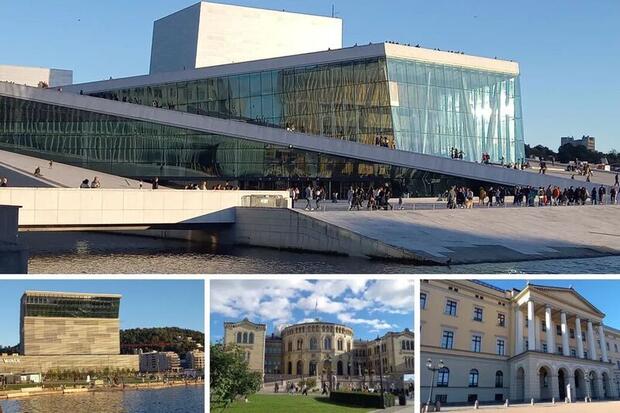
I walked to the Nobel Peace Centre with a glimpse towards the cafes and bars of Aker Brygge – a lively, regenerated neighbourhood along the waterfront. The Oslo Fjord is such a gorgeous natural feature of the city, and it was particularly delightful when glistening in the autumnal sunshine. Continuing my self-guided sightseeing tour, I then made my way to Oslo City Hall and Akershus Fortress, a medieval fortress that dates back to the late 13th century. Unfortunately the Resistance Museum was closed as I was keen to see this. My grandfather had been in Norway during WWII and I wanted to see if there were any references to him and his regiment.
Afterwards, I made my way to the Opera House, a stunning architectural masterpiece right by the Oslo Fjord, whose unique marble-and-glass design makes it look a little like a glistening iceberg or glacier floating in the water. You can even walk on the roof here for free, which I’d recommend. Nearby is the Munch Museum, with 13 floors dedicated to the life and works of the famous Norwegian artist Edvard Munch, including his most famous masterpiece ‘The Scream’, on the fourth floor.
After walking nearly 10 miles, I returned to my hotel for dinner and retired for the night, thoroughly satisfied by my whistle-stop exploration of Oslo – a city that I’d definitely return to and certainly recommend as a destination for a long weekend, or as part of a wider Norwegian adventure.
Part two: Alta
The following morning, I returned by train to Oslo Gardemoen Airport for a two-hour flight to Alta, a small city right up in the far north of Norway, around 400 kilometres within the Arctic Circle. On arrival at Alta Airport, I took a taxi to the city centre which is only 10 minutes away. I was staying at the Hotel Canyon, a modern hotel with a restaurant and bar. My room was clean and comfortable and the hotel is very centrally located.
Alta’s downtown area is very compact, so it really doesn’t take long to explore. The main street has several restaurants and three main hotels – the Thon Hotel Alta, Hotel Canyon and the Scandic Hotel Alta. All the buildings were built post-1945, as the original city was sadly destroyed by German forces in WWII. I visited the Northern Lights Cathedral, which is constructed from titanium and its stunning spiral is inspired by the swirl of the aurora borealis. The city has historically served as a meeting place for Sámi, Kven and Norwegian cultures and the population today is around 16,000. After exploring, I returned to the hotel and met up with my group for dinner at a really good local restaurant, Erica mat and vinbar, which I’d highly recommend.
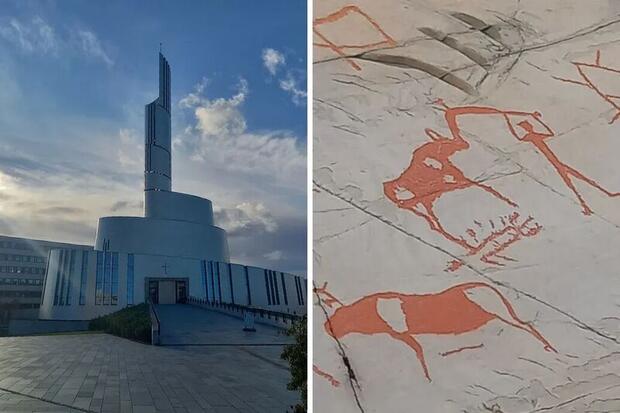
After a delicious breakfast at the Hotel Canyon the next morning, we were taken to the Alta Museum, which is around 15 minutes away by car. It has a beautiful location beside the Alta Fjord and we took a short walk outside to see the wonderful collection of late Stone Age rock carvings, dating from 7,000 to 2,000 years ago. This is designated a UNESCO World Heritage Site and the rock carvings are truly incredible; there are carvings of people, fishing boats, reindeer and bears.
Afterwards we headed to ONGA Boutique Lodge, which is located about 30 minutes away down an unpaved dirt track. The bumpy road is apparently much easier to navigate in the winter when it’s fully covered in snow. Peacefully tucked away in a forest, it’s an intimate lodge with just 10 tastefully designed rooms, some of which come with saunas and jacuzzis. There are also four glass Aurora Domes, which would be perfect for watching the Northern Lights in the evenings, especially as there’s virtually no artificial light pollution in this area. We had lunch there which was absolutely delicious; confit reindeer with root vegetables, followed by homemade strawberry cake.
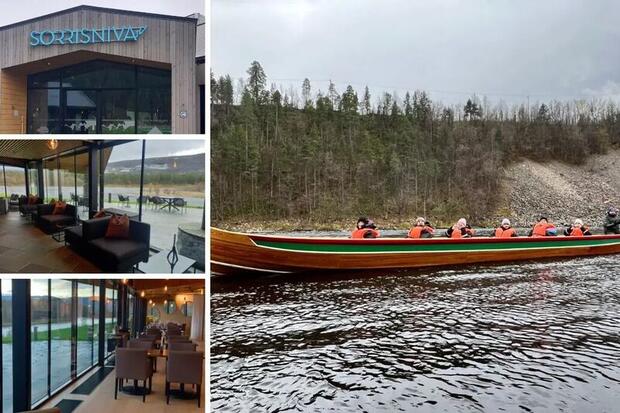
Afterwards we drove to Arctic Wilderness Lodge and Sorrisniva Igloo Hotel, around 20 minutes outside of Alta city, beautifully positioned on the banks of the Alta River. The main hotel reception and lounge areas are immaculately designed, with high ceilings and expansive windows that allow in lots of natural light while offering expansive views of the surrounding landscapes. After being kitted out with warm winter suits, gloves, boots and life jackets, we were taken on a thrilling riverboat excursion along the Alta Canyon. It was a really wonderful experience, gliding along the Alta River through the untamed Arctic wilderness, while being expertly navigated by our guide. In autumn, the hotel organises plenty of other fabulous activities such as whale watching, hiking, king crab fishing, reindeer experiences and Northern Lights hunts.
Back at Arctic Wilderness Lodge, we took a look at the stylish rooms and suites, all of which come with floor-to-ceiling windows facing the Alta River. The King Suite was my favourite room, named after the late King of Norway, Harald V, who used to enjoy fishing on the Alta River. The lodge has a stunning communal lounge area, a delightful fine dining restaurant (called Maku, meaning ‘taste’ in Sámi) and a lovely SPA and wellness centre with outdoor jacuzzis. In winter, the Sorrisniva Igloo Hotel takes shape on the grounds at the front of the lodge. It has an Ice Bar, an Ice Chapel and incredible themed Igloo Suites with hand-carved ice sculptures, which are rebuilt from scratch each winter.
Afterwards, we visited some excellent local suppliers in the Alta area. At Sámi Siida, we experienced authentic Sámi Culture first hand. It’s a family-owned reindeer farm where guests can meet and feed the reindeer and learn all about the customs and traditions that shape the Sámi way of life. I felt really privileged to hear a ‘joik’, a traditional Sámi song which was performed in a lavvu tent while we enjoyed a hot drink and cake around a campfire.
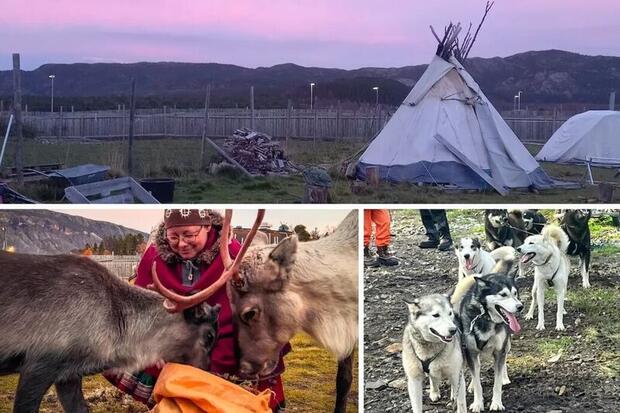
We also visited two exceptional husky farms, both of which are featured in the sledding excursions from Arctic Wilderness Lodge and Sorrisniva Igloo Hotel. The first, Holmen Husky Lodge, is a family-run lodge and located only 10 minutes outside Alta. The owner, Brage, is passionate about his huskies and has participated in the famous annual Finnmarkslopet long-distance sled dog race, following in the footsteps of his parents who both completed the race in previous years. We met some of the friendly huskies including some adorably cute puppies! In autumn, Holmen Husky offers their ‘Dryland Mushing Experience’, which is dog sledding on wheels rather than on a traditional sled. In winter, they offer a multitude of sledding options and they also have seven luxury Forest Suites inspired by traditional Sámi lavvus.
We then stopped at Trasti and Trine, a cosy and authentic boutique guesthouse located only 10 minutes away from Alta, with husky kennels and delightful cabins. In my humble opinion, the restaurant here is worthy of a Michelin Star. We had a delicious dinner of fish soup, roasted reindeer with root vegetables, and panacotta, paired with a bottle of dry white wine from Trasti’s vast wine cellar. They offer fantastic husky sledding excursions in all seasons and Trine is an experienced dog musher who has competed in many dog sledding races.
The following day we visited GLØD Explorer, a local supplier offering wonderful activities and expeditions in the Alta area, including Northern Lights trips, snowshoeing, cross-country skiing and mountain biking. They also offer accommodation in the pine forest in the form of Canvas Domes and a restaurant with a locally-inspired three-course menu. Our final stop was Bjornfjell Mountain Lodge, which is located 20km from Alta. It’s a small boutique property with five private cabins, lovely hotel rooms, a sauna and a jacuzzi. We had a delicious dinner in the restaurant, again based on seasonal, locally-sourced produce, served in a delightfully warm, cosy setting.
Part three: Lyngenfjord, Skjervøy & Tromsø
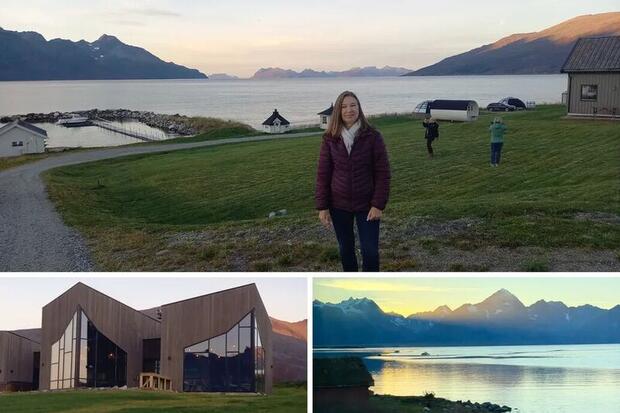
The following day, we left Alta behind and drove to the beautiful Lyngenfjord area. The route was exceptionally scenic as we weaved between mountains and fjords before stopping to visit the incredible Lyngen North Glass Igloo Hotel. The location is stunning, right by the edge of the Lyngenfjord with views towards the Lyngen Alps across the water. We were lucky to spot wild porpoises in the fjord, which was a real joy to see!
The hotel offers Glass Igloos by the fjord, two Sea Cabins and luxurious Sky Suites with panoramic floor-to-ceiling windows and their own private outdoor jacuzzi. We ate a terrific dinner in the Restaurant Solvind, accompanied by beautiful views of the fjord and the mountains. The sommelier was very knowledgeable and paired our dinner with a selection of superb red and white wines. The hotel is on the Arctic Bus Route from Tromsø and can also be reached by air from Tromsø to the small nearby airport of Sørkjosen.
After spending a night in a nearby small hotel, Hotel Reisafjord, we drove to the fishing village of Skjervøy, famous for its multitude of whales that can be seen in the fjord in the autumn and winter months. The whale watching season here runs from the end of October to January, and we were lucky to be embarking on a Sea Life Safari by RIB boat with the excellent local company, Explore 70 Degrees, whose owners are passionate about the local birds and wildlife in this delightful coastal area.
We were kitted out with warm waterproof clothing, boots and life jackets, and boarded our 12-seater RIB boat. As we left the harbour into the open sea, to my absolute delight, we spotted a pod of wild orcas nearby. It was my first experience of whale watching and I loved every minute – it was truly one of the most memorable days of my life! Our Captain explained that the Harvest Moon in late September can signal the arrival of herrings into the fjord area around Skjervøy, which attracts pods of orca whales. It was so thrilling to see so many pods of these majestic creatures in such close proximity.
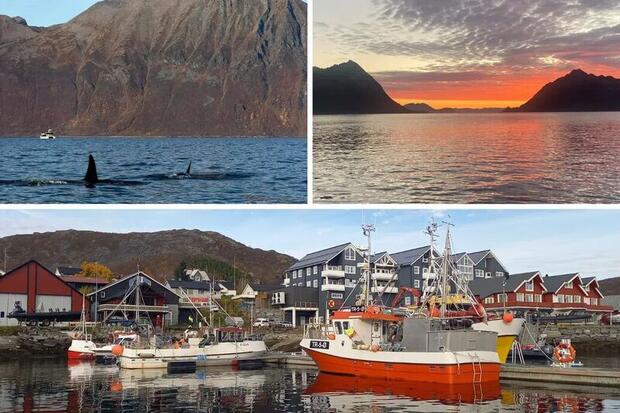
After this exhilarating experience, we explored the charming village of Skjervøy itself, and had a delicious lunch of fish soup in the cafe of the small local history museum, Seppalatunet. The Museum conveys the story of Leonhard Seppala, a local who grew up in Skjervøy in the 19th century, and became known as one of the world’s leading sled dog drivers.
In the evening we left Skjervøy by speedboat, bound for the city of Tromsø, a journey which takes two-and-a-half hours and operates six days a week. The journey was a brilliant way to experience an evening boat trip as the coastal and mountain scenery glowed amid the autumn sunset.
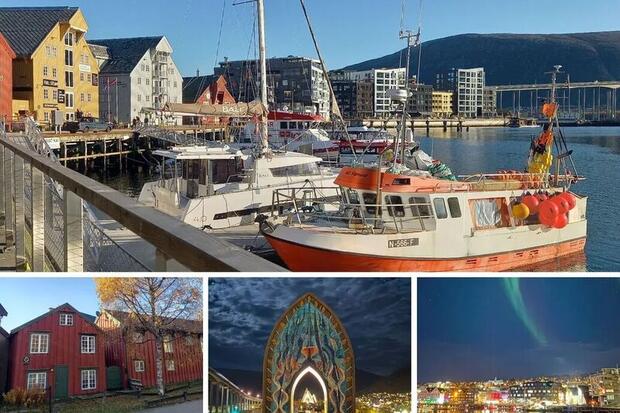
On arrival in Tromsø, we disembarked for a delicious dinner and a lovely evening walk around the city. It was wonderful to be back in Tromsø again after such a long time. The city looked magical with the colourful boats bobbing in the harbour, the Arctic Cathedral illuminated across the water, and the lively vibes of the restaurants and bars.
It was made all the more perfect by a timely appearance of Northern Lights, which we were able to clearly see by naked eye from the city centre – a magical way to cap off my unforgettable autumn adventure in Arctic Norway.


