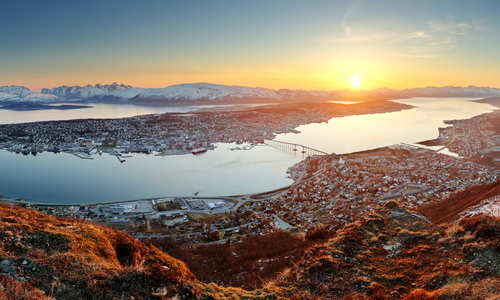
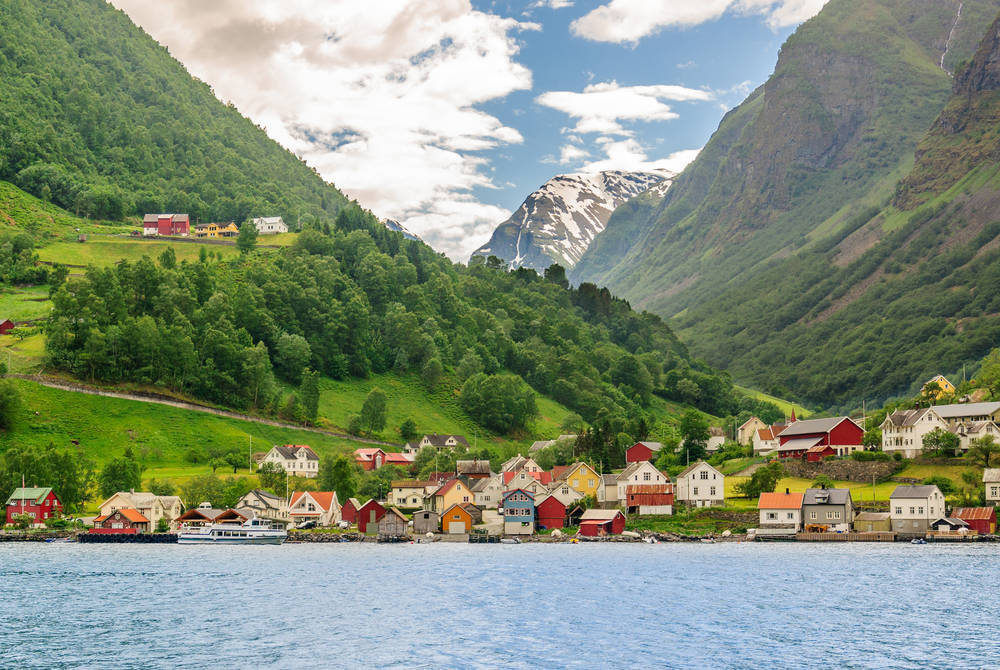
Spread along a valley flanked by steep mountains on the edge of a fjord lies Longyearbyen, the world’s northernmost town with a population greater than 1,000 and the primary settlement in the Svalbard archipelago. At 78°N, it lies just 1,300 kilometres from the North Pole, and can easily be reached by a 90-minute flight from Tromsø in mainland Norway. Originally established as a coal mining settlement in the early 20th century, Longyearbyen has evolved into a hub for Arctic tourism and scientific research, underpinned by a cosmopolitan community of around 2,500 people from over 50 countries. With numerous hotels, restaurants, cafes and museums, along with the world’s northernmost brewery, cinema and shopping mall, it offers a remarkably extensive range of amenities for somewhere so remote. Owing to dramatic seasonal contrasts in terms of temperatures, snow cover and daylight hours, the choice of activities on offer varies significantly throughout the year – something to bear in mind before planning your trip. To point you in the right direction, here are our top 10 things to do in Longyearbyen, Svalbard.
1. Venture into the wilderness on a snowmobile or husky safari
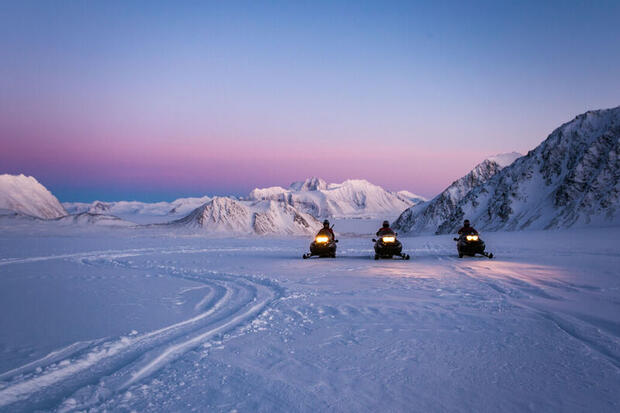
Snowmobiling in Svalbard
Longyearbyen is the starting point for all kinds of tours that venture out through the Adventdalen valley into the polar wilderness of Svalbard, primarily by snowmobile or by husky sled. Both are thrilling in their own way and offer the chance to explore the archipelago’s awe-inspiring landscapes when cloaked in snow and ice. Such adventures may be possible as early as November or December, but January through to April tends to provide the best snow conditions. These tours can last anywhere from a couple of hours to a full day and include thermal suits and boots to keep you warm and comfortable in sub-zero temperatures. Your guides will be equipped with firearms, as it is prohibited to go beyond the limits of Longyearbyen without carrying the necessary polar bear protection.
When: December – May
2. Spend an evening at Camp Barentz
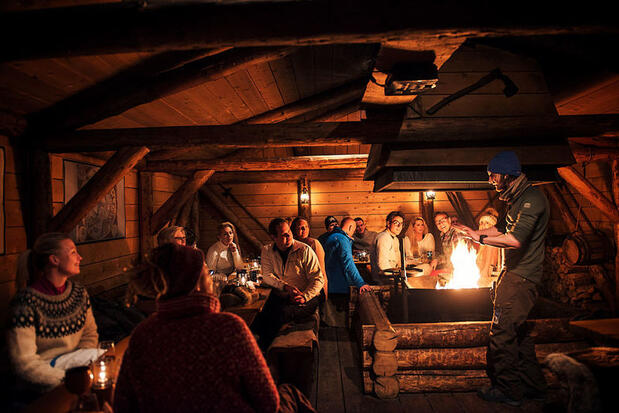
Camp Barentz (Credit: Agurtxane Concellon/Hurtigruten Svalbard)
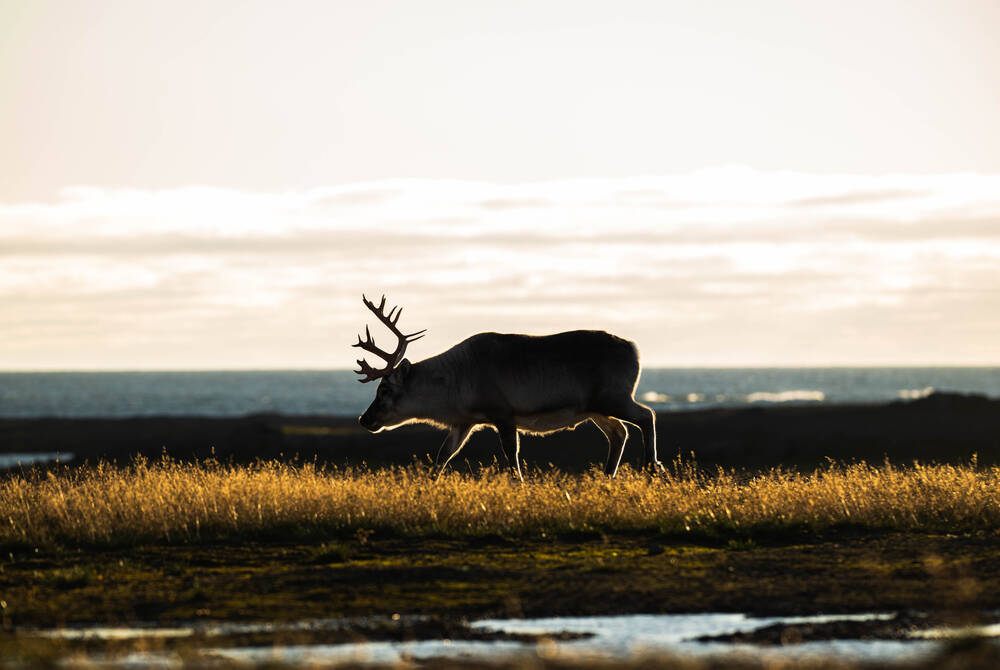
Around 10 kilometres outside of Longyearbyen in the Adventdalen valley, Camp Barentz invites you to spend an evening in a traditional trapper’s cabin – designed as a copy of the cabin where Willem Barentsz, the discoverer of Svalbard, took refuge in 1596. Beside a roaring campfire, you’ll enjoy a presentation about Svalbard’s most famous resident – the polar bear – while enjoying a hearty reindeer soup, followed by hot drinks and dessert. Before returning to Longyearbyen, there will also be an opportunity to head outside and take photographs of the surrounding landscape, where you might be fortunate enough to spot reindeer roaming in the wild and, depending on the time of year, the Northern Lights.
When: Year-round
3. Visit the Svalbard Museum
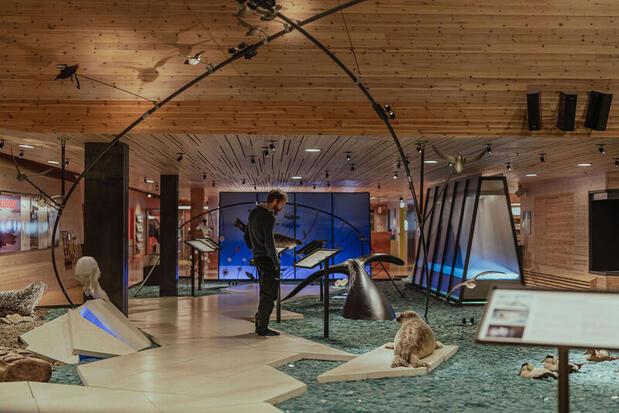
Svalbard Museum (Credit: Ragnhild Utne/Svalbard Museum)
This small but well-curated museum takes you on a fascinating journey through the natural and cultural history of Svalbard, from its discovery by Dutch explorer Willem Barentsz in 1596 through to the present day. You’ll learn all about Svalbard’s earliest settlers, how trappers carved out methods to survive in extreme Arctic conditions, and the discovery of rich coal deposits which fuelled the growth of its mining industry in the early decades of the 20th century. The museum also provides a detailed insight into the wildlife and geology of Svalbard throughout the centuries, showcased via a series of artifacts, archives, photographs and text exhibits.
When: Year-round
4. See the Northern Lights
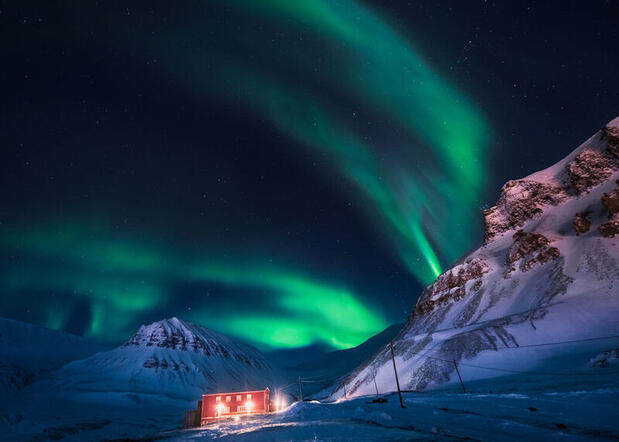
Northern Lights in Longyearbyen
If you’re hoping to see the Northern Lights, time your trip to Svalbard between late September and mid-March as this is when the nights are dark enough for the aurora to be visible. At 78°N, Longyearbyen is actually so far north that it lies towards the outer fringes of the auroral oval – the geographical zone where the Northern Lights are most frequently seen – meaning sometimes, the lights appear towards the southern horizon. If you visit Longyearbyen during the darkest period of Polar Night (mid-November to mid-January), it’s even possible to see the Northern Lights at any time of the day. When the auroral activity is sufficiently strong, you might be able to spot the Northern Lights by simply walking around town, although finding a spot shielded from artificial light pollution will give you the best views (but of course, never wandering beyond the town limits). You might therefore opt to join a guided Northern Lights tour by snowmobile or snowcat, which will take you out of Longyearbyen to a location with optimal viewing conditions.
When: Late September – mid-March
5. Go beer tasting at the world’s northernmost brewery

Beer tasting at Svalbard Brewery
When Svalbard Brewery began serving its first beers back in 2015, it became the world’s northernmost brewery – a title previously held by Mack Brewery in Tromsø – after founder Robert Johansen (a former coal miner) successfully campaigned to overturn a 1928 law prohibiting alcohol production on Svalbard. Since then, it has become a roaring success, and Svalbard Brewery’s products can be found on tap in most bars and restaurants in Longyearbyen. Tasting sessions are hosted at the brewery several times a week, giving you the opportunity to try five Svalbard beers (which contain 16 percent glacier water) while learning all about the history of the brewery and the unique process of making beer at the top of the world.
When: Year-round
6. Spot Arctic wildlife on a fjord safari
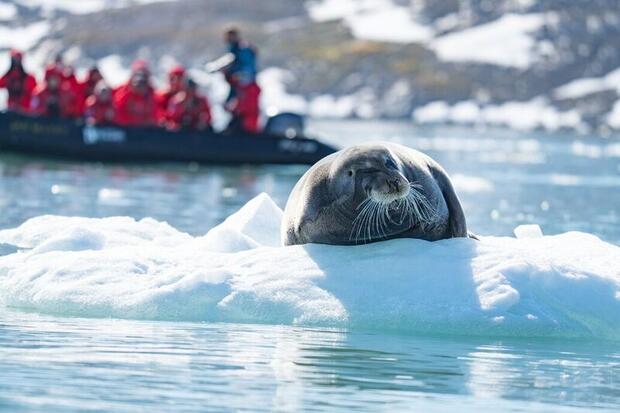
Bearded seal in Svalbard
Svalbard is home to a rich array of Arctic wildlife, including walruses, seals, reindeer, puffins, Arctic foxes, numerous species of whale, and, of course polar bears. The best way to maximise your chances of spotting wildlife in Svalbard is to join a fjord safari – either by RIB boat or catamaran – which will take you from Longyearbyen out to the remote fjords along the coastline of Spitsbergen. While keeping your eyes peeled for wildlife, you’ll be treated to magnificent views of Svalbard’s rugged mountains and awe-inspiring glaciers. Besides classic fjord safaris, you might be tempted by the likes of a sunset dinner cruise, a kayaking tour, or, for the ultimate Arctic adventure, a multi-day Svalbard mini-cruise, which will take you right up to the far north of Spitsbergen, including the rare opportunity to spot walruses at Moffen Island and visit the remote scientific research settlement of Ny-Ålesund.
It’s important to note that while polar bear sightings are possible, this will only be by chance – and from a distance – as it is strictly prohibited to pursue or disturb a polar bear in Svalbard. As such, there are no organised tours geared towards seeking out polar bears in Svalbard.
When: April – October (depending on specific tour)
7. Join an ice cave tour
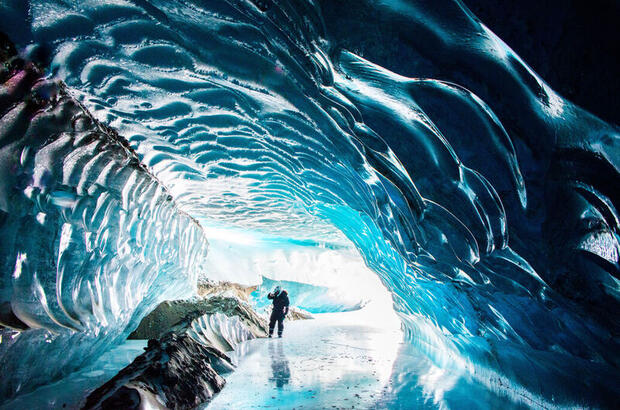
Ice cave in Svalbard
Deep within Svalbard’s glaciers are crystalline labyrinths of glistening ice tunnels and caves, carved by meltwater during the summer months. Some of these can be safely explored on guided tours using ice picks, crampons and head torches, enabling you to delve beneath the surface into this enchanting frozen world. These tours begin in Nybyen, at the southern end of Longyearbyen, and proceed to the ice caves either on foot (using snowshoes to hike) or by snowcat or snowmobile.
When: November – May
8. Explore a historic coal mine
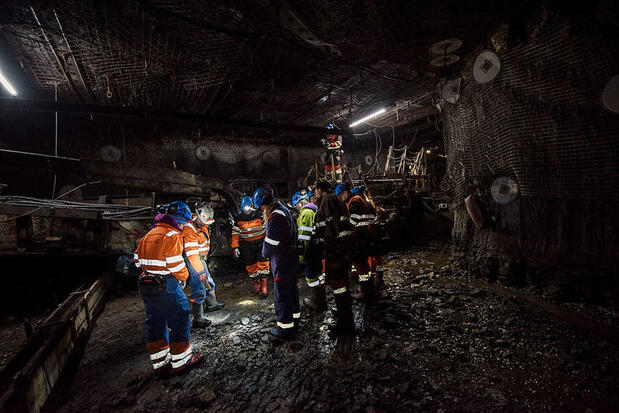
Exploring a coal mine in Svalbard (Credit: Agurtxane Concellon/Hurtigruten Svalbard)
Longyearbyen’s days as an active coal mining town are over following the closure of its last mine (Mine 7) in 2025, but you can still venture inside a former coal mine (Mine 3) on a guided tour which offers a fascinating window into the town’s past. This mine, located inside a mountain just above the airport, was in production from 1971-1996. Throughout the tour, which lasts around three hours, you’ll learn about the daily lives of Longyearbyen’s coal miners and the dangers they faced, as well as the strong sense of culture and community fostered by the coal mining industry throughout the 20th century. As you walk through the tunnels, you’ll find that many details have been left untouched, therefore revealing an authentic glimpse of what the mine would have looked like back in its heyday.
When: Year-round
9. Visit the Global Seed Vault
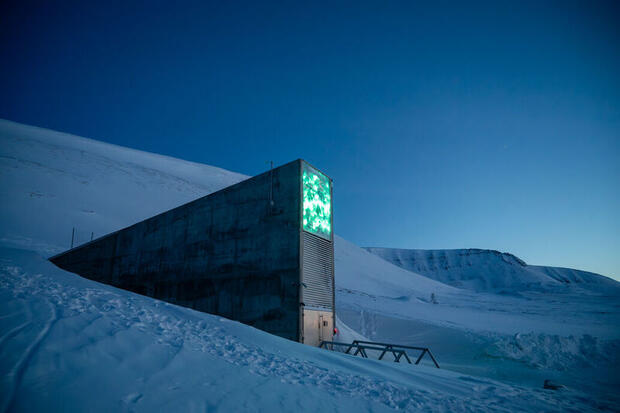
Svalbard Global Seed Vault (Credit: Rune Dahl/nordnorge.com)
Not far from Mine 3, also burrowed into the mountainside above the airport, is another significant Svalbard landmark – the Global Seed Vault. This unique structure (nicknamed ‘the Doomsday Vault’) was opened by the Norwegian government in 2008 and has become the world’s largest secure seed storage, with over a million seed samples stored in rock vaults buried deep inside the permafrost. While the vault itself is closed to visitors, it’s possible to view its striking concrete-and-glass entrance from the exterior – either on a guided hike (in the summer months) or as part of a ‘Longyearbyen in a nutshell’ guided taxi tour.
When: Year-round
10. Experience Arctic fine dining at Huset

Arctic fine dining at Huset restaurant (Credit: Christine Baglo/visitnorway.com)
A Longyearbyen institution, Huset has served many different purposes over the years, previously housing a cinema, a church, a school, a post office and even a temporary hospital. It officially opened in 1951 and has been an important meeting point for local residents over the years – an integral part of local life. Today, it’s revered as a Nordic fine-dining restaurant, offering an innovative 14-course gourmet tasting menu inspired by ingredients from Svalbard and the wider Arctic region. It also houses one of Scandinavia’s most extensive wine cellars, with more than 6,000 bottles stored within its walls. Be sure to book a table, as this is the most coveted dining spot in town.
When: Year-round